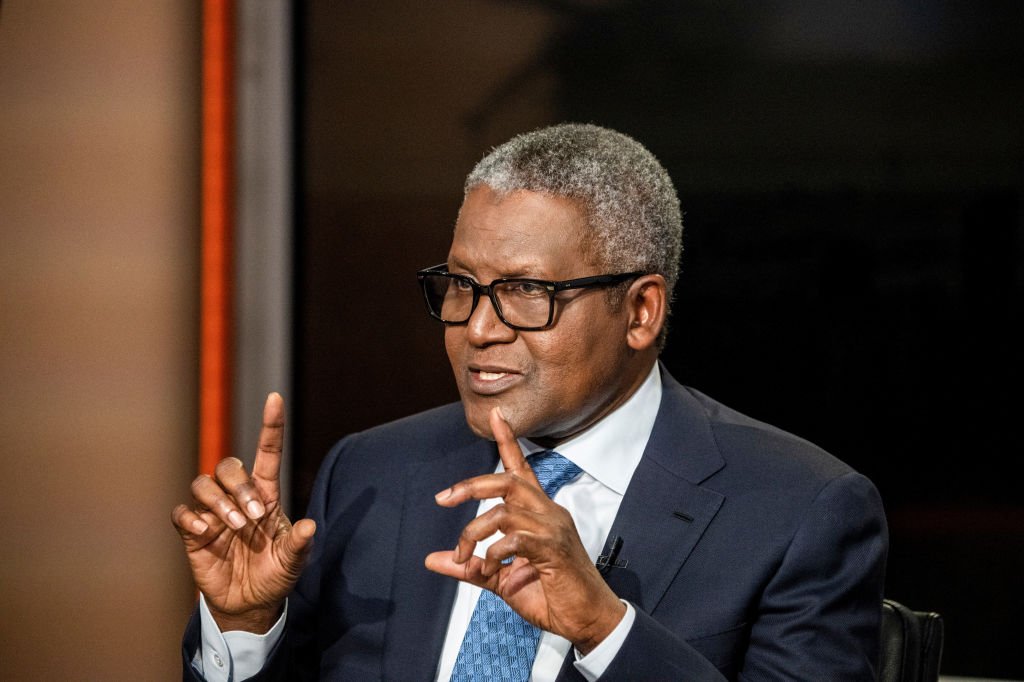
There is a growing tendency in today’s Nigeria to mistake familiarity for sophistication, informality for modernity and the deliberate erosion of social boundaries for evidence of enlightenment. The controversy surrounding a young lady who addressed Tony Elumelu simply as “Tony” at a formal UBA event is another example of this troubling trend.
For me, Mr. Elumelu was right to correct her.
It was not an act of arrogance. It was not an abuse of power. It was not necessarily a reflection of her social status or family background. And, most importantly, it was not an attack on her person. He simply told her how he preferred to be addressed. In a formal setting, that is a perfectly legitimate expectation.
The young lady may have intended no disrespect. I will give her that benefit of the doubt. Perhaps she has grown up in an environment where addressing accomplished people by their first names is considered normal. Perhaps she was influenced by contemporary corporate culture, where colleagues sometimes dispense with titles. But intention does not automatically erase context.
Context matters.
A family gathering is not a corporate event. A university classroom is not a nightclub. A boardroom is not a social-media livestream. The way we address people should, among other things, reflect the setting, the relationship and the level of familiarity that actually exists between the people involved.
If I meet someone for the first time at a formal event and that person is significantly older than me, highly accomplished and occupying a position of authority, I do not need to be told before I exercise discretion. I will naturally choose an appropriate form of address.
And if that person subsequently says, “Please call me Mr. So-and-so,” there should be no national debate about it. I simply say, “Yes, sir.”
That is called courtesy.
Maya Angelou made the same point
Interestingly, this is not uniquely Nigerian or African.
The late American literary icon, Dr. Maya Angelou, had a similar encounter with a young woman who addressed her by her first name. Angelou immediately corrected her: “I’m Miss Angelou. I’m not Maya.” She went further to explain that, because of her age and the different roles she occupied as a mother figure, auntie, teacher and professor, the young woman could not simply assume that first-name familiarity was appropriate.
And this was not merely an isolated eccentricity.
Former students of Angelou have recalled that she deliberately discouraged first-name familiarity in her classroom. One former student explained that she wanted students to understand that respect does not require pretending that an intimacy exists where there is none. Students addressed one another formally as Mr., Miss or Professor.
That is a powerful lesson.
There is nothing inherently progressive about pretending that everybody is your mate.
Titles and forms of address exist partly because relationships and responsibilities are different. A professor is not necessarily your classmate. A chairman is not necessarily your colleague. A judge is not necessarily your drinking partner. An elder is not necessarily your age mate.
We should stop confusing equality of human worth with sameness of social relationship.
“But what if she were Otedola’s daughter?”
This is where I strongly disagree with the argument being pushed by some Nigerians that Mr. Elumelu would not have corrected the young lady if she had been the daughter of Femi Otedola, Aliko Dangote or another member of Nigeria’s wealthy elite.
That argument is not only speculative; it is a lazy way of analysing the issue.
How do we know what Mr. Elumelu would have done?
We don’t.
But more importantly, why should we automatically assume that children of wealthy families are incapable of understanding respect?
Some of the most privileged young Nigerians are also extremely well-mannered. Wealth does not necessarily produce arrogance, just as poverty does not necessarily produce humility. Character is an individual and family matter.
Indeed, a young person from a wealthy and influential family may actually have been raised to understand protocol, hierarchy and appropriate conduct around elders and people of authority.
A person’s surname does not determine whether a particular form of address is respectful.
And there is a simple contemporary example that makes the point.
This week, during the visit of Osun State Governor Ademola Adeleke to FCT Minister Nyesom Wike, Davido was seen in a widely circulated video interacting playfully with Wike. At one point, after bantering with the minister about the Osun election, Davido reportedly prostrated before Wike and the two later embraced.
Davido is hardly an unknown young Nigerian. He is one of Africa’s biggest entertainment personalities and comes from a highly prominent family.
Yet, when the moment called for it, he demonstrated deference.
That should tell us something.
Being wealthy, famous or connected does not make respect obsolete.
Respect is not oppression
Some people have attempted to frame the Elumelu incident as another example of an older generation imposing its outdated values on young Nigerians.
I disagree.
Respect is not oppression.
Respect is not slavery.
Respect is not fear.
And correcting someone about how you wish to be addressed is not an attempt to establish that the other person is inferior.
There is a difference between saying, “You are beneath me,” and saying, “This is how I would like you to address me.”
Mr. Elumelu did the latter.
In fact, there is something healthy about people being able to establish boundaries around how they wish to be addressed.
If someone prefers “Tony,” fine.
If another person prefers “Mr. Elumelu,” fine.
If a professor prefers “Professor,” that should be respected.
If a traditional ruler prefers his title, address him accordingly.
If a judge is addressed as “My Lord” in the appropriate setting, that is not necessarily worshipping the judge.
It is protocol.
Formal settings require formal conduct
The strongest point in Mr. Elumelu’s favour is the setting.
This was not a young lady meeting Tony Elumelu casually at a restaurant. It was not a family party. It was not a private conversation between friends.
It was a formal corporate event.
And formal environments have rules—some written, many unwritten.
We understand this in virtually every other area of life.
You dress differently for a wedding than you do for the beach.
You speak differently in a courtroom than you do in your sitting room.
You do not walk into the office of the President and say, “Hey, Bola!”
You do not meet the Chief Justice and casually say, “Hello, Ariwoola,” simply because you know his first name.
You do not walk into a university lecture hall and address your professor as “Hey, John!” unless that professor has expressly invited you to do so.
Why, then, should the chairman of a major financial institution be denied the same discretion?
Modernity does not abolish manners.
And corporate culture does not mean everybody becomes everybody’s mate.
The dangerous celebration of “I can call anybody anything”
There is a broader cultural problem here.
We have gradually entered an era where some young people believe that informality is automatically a virtue and formality is automatically evidence of backwardness.
It is not.
There are environments where first-name interaction is perfectly appropriate. There are also environments where titles and surnames are appropriate.
The wisdom is knowing the difference.
Being sophisticated is not knowing how to call everybody by their first name.
Being sophisticated is knowing when you should—and when you shouldn’t.
And sometimes, the most intelligent thing a young person can say to an accomplished elder is simply, “Sir.”
Not because the young person is inferior, but because the young person understands courtesy.
“If you don’t train your child, someone will”
There is an old Nigerian saying: If you do not train your child, somebody else will.
It may sound harsh, but there is wisdom in it.
Parents have a responsibility to teach children how to navigate society.
They should teach them how to greet.
They should teach them how to speak to elders.
They should teach them that not every adult is their mate.
They should teach them that confidence does not mean disrespect.
They should teach them that being educated does not mean abandoning courtesy.
And they should teach them that knowing your rights does not mean refusing to acknowledge your responsibilities.
If someone is corrected in such a situation, the appropriate response should not be outrage. It should be learning.
The young woman could simply have said: “I’m sorry, Mr. Elumelu.”
End of story.
There would have been no controversy.
African culture is not the problem
Some critics have described Elumelu’s reaction as an example of an outdated African obsession with hierarchy.
I think that is an oversimplification.
African societies have historically placed enormous value on respect for elders. The specific customs differ from one ethnic group to another, but the underlying principle is broadly familiar: age, experience and social responsibility matter.
We should not throw that away simply because some people abuse hierarchy.
Yes, there are situations where titles are used to intimidate people.
Yes, some wealthy Nigerians demand excessive deference.
Yes, some people weaponise age and position.
But those abuses should not make courtesy itself suspect.
If a particular practice is abused, reform the abuse—not the virtue.
We cannot build a decent society by teaching young people that every form of deference is humiliation.
The Otedola argument misses the point
The argument that “if she were Otedola’s daughter, Elumelu would have kept quiet” also exposes something uncomfortable about the people making it.
They are accusing others of judging people by class while simultaneously judging the entire incident through class.
They are saying, essentially, that the young woman’s surname determined how she was treated—even though there is no evidence that this is what happened.
That is not analysis.
That is conjecture.
If Mr. Elumelu had corrected the daughter of a billionaire under the same circumstances, the same people would probably say, “Of course, he can correct her because they are from the same social class.”
If he had not corrected her, they would say, “See? He respects rich people.”
In other words, whatever happened would be interpreted to support the preferred narrative.
That is not fairness.
The real lesson for young Nigerians
The lesson from this episode should not be that young Nigerians must live in fear of older people.
Far from it.
Young people should be confident. They should ask questions. They should challenge authority when necessary. They should demand accountability. They should refuse humiliation.
But confidence must be accompanied by emotional intelligence.
You can be brilliant and still say “Sir.”
You can be wealthy and still bow to an elder.
You can be famous and still observe protocol.
You can be educated and still have manners.
You can be powerful and still show humility.
Davido’s interaction with Wike is a timely illustration. Whatever one’s political views about either man, the fact that a globally recognised entertainer could still demonstrate physical deference to an older public figure shows that fame does not have to erase courtesy.
That is not weakness.
That is upbringing.
We should stop making everything about class
Perhaps the most frustrating part of this controversy is how quickly Nigerians have turned a simple issue of etiquette into a referendum on wealth, privilege and family background.
Sometimes “Tony” is simply “Tony” to the person who said it.
And sometimes “Mr. Elumelu” is simply “Mr. Elumelu” because that is the respectful way to address a senior person in a formal setting.
Not everything is a conspiracy.
Not every correction is oppression.
Not every rebuke is bullying.
And not every elder who insists on being addressed properly is suffering from an inferiority complex.
Sometimes, a person is simply asking for respect.
Mr. Elumelu was not wrong
I do not believe Mr. Elumelu did anything wrong by correcting the young woman.
Was the correction necessary? Perhaps not in the grand scheme of things.
Could he have ignored it? Certainly.
Could he have handled it more softly? Perhaps.
But was he wrong to say that he did not want to be called “Tony” in that setting?
No.
He had every right to establish the form of address he was comfortable with.
And the young lady had every opportunity to accept the correction gracefully and move on.
What I find more troubling is that Nigerians have now taken a brief moment of correction and transformed it into a courtroom in which the young lady’s parents, upbringing, social class and future are all being put on trial.
That is unnecessary.
Correcting someone is not the same as destroying someone.
Let us also resist the temptation to turn this into a gender issue. A young man addressing an older man improperly in the same formal setting would equally deserve correction. The central question should remain etiquette and context—not whether the person holding the microphone was male or female.
Sometimes, “Sir” is enough
There is a generation of Nigerians that grew up understanding something very simple: you do not have to be afraid of an elder to respect him.
You simply greet him properly.
You listen when he speaks.
You call him by an appropriate title.
You learn from his experience.
And if you disagree with him, you disagree respectfully.
That is not backwardness.
That is civilisation.
The real danger is not that young Nigerians are becoming too confident. Confidence is good. The danger is when confidence becomes entitlement; when familiarity becomes disrespect; when informality becomes an excuse for poor manners; and when correcting bad etiquette is itself labelled oppression.
Mr. Elumelu’s correction should therefore not be interpreted as a declaration of war against young Nigerians or Western corporate culture.
It should be understood for what it was: an older man telling a younger person how he wished to be addressed in a formal setting.
Maya Angelou did something remarkably similar decades ago. Her lesson was clear: familiarity is not something a younger person should simply assume.
Perhaps Nigerians should take that lesson seriously.
Call Mr. Elumelu “Mr. Elumelu.” Call him “Chairman.” Call him “TOE” if that is what he permits.
But if he says, “Don’t call me Tony,” the appropriate response is not to convene a national conference on oppression.
It is simply:
“Yes, sir.”
And then we move on.
Because sometimes, respect is not complicated.
Sometimes, it is just good manners.